

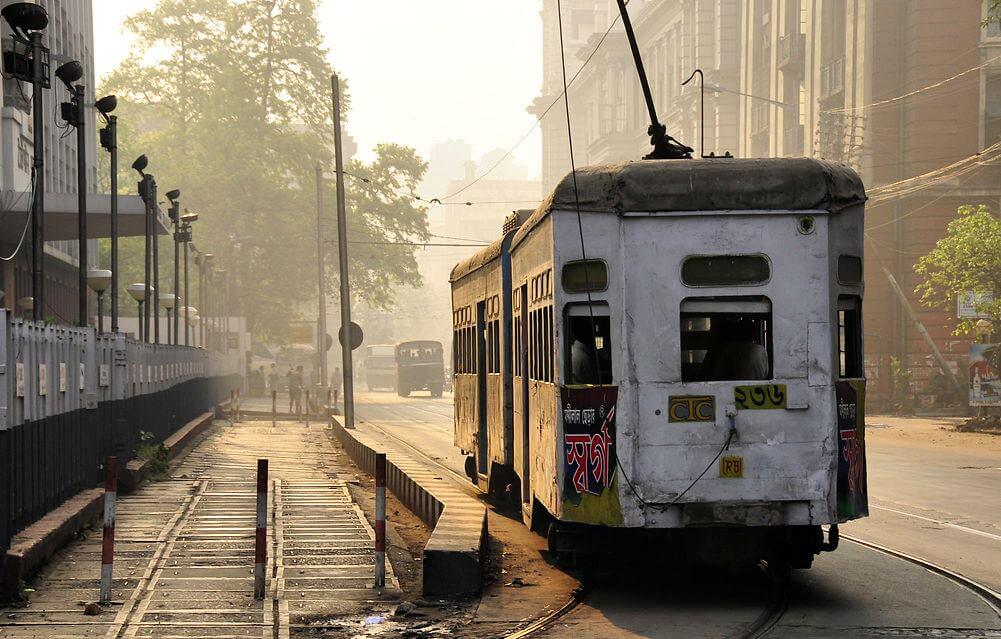
Kolkata trams, at the very mention of them, the first thing that comes to mind is heritage, something that has been with us since the British era, wrapped in a legacy we have long cherished. Yet, in return, we have failed to give it anything back; all we have offered is neglect.
As noted by renowned writer Debanjan Sengupta, the Kolkata tram today seems like a weary, aged figure, exhausted and frail. It is startling to think that something with such a glorious past may soon cease to exist, its present so painfully indifferent compared to its once-grand history. The story of Kolkata trams began during the colonial period.
In 1873, their journey commenced. At that time, the trams were horse-drawn, with each carriage accommodating around 45 passengers. They carried a sense of pride as they moved through the city, extending their presence not only in Kolkata, the capital of British India, but also in several other major cities, including Mumbai, Delhi, Chennai, Patna, Colombo, Kanpur, and Karachi.
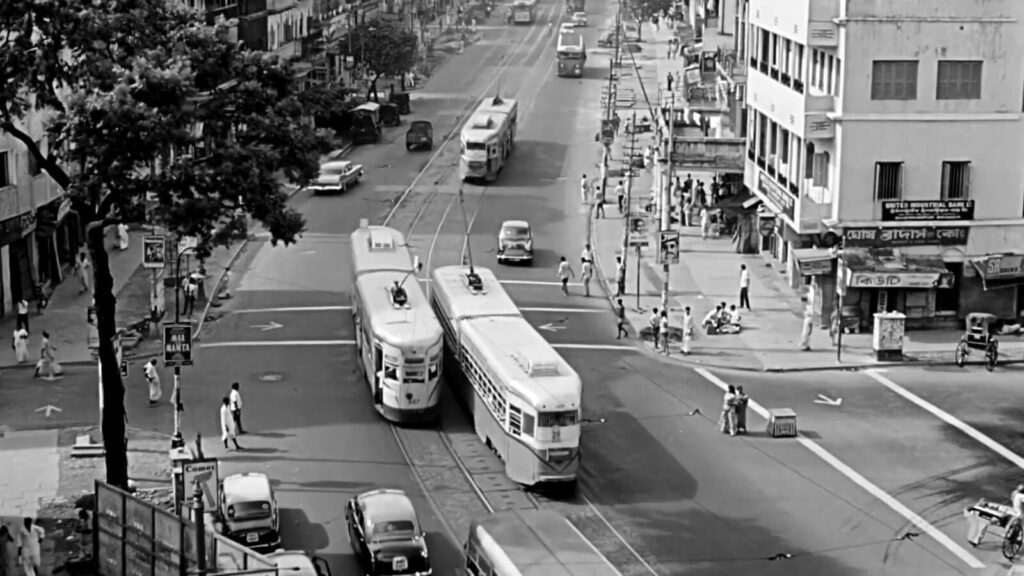
On February 24, 1873, the first tram ran amid great public curiosity. Around 9:15 in the morning, the first and second-class compartments stood ready. On the very first day, the second-class compartment was overcrowded. The load was so heavy that even two strong horses could not pull it, forcing the company’s employees to push the tram. It moved very slowly and eventually reached its destination, but the first attempt ended in failure, leaving a mark of disappointment.
It is said that due to excessive load and the oppressive heat, even the robust Australian horses could not cope, leading to their premature deaths. These issues caused the company to incur losses of nearly 500 rupees per month—a significant amount at that time. Unwilling to bear the losses, the authorities shut down the tram service.
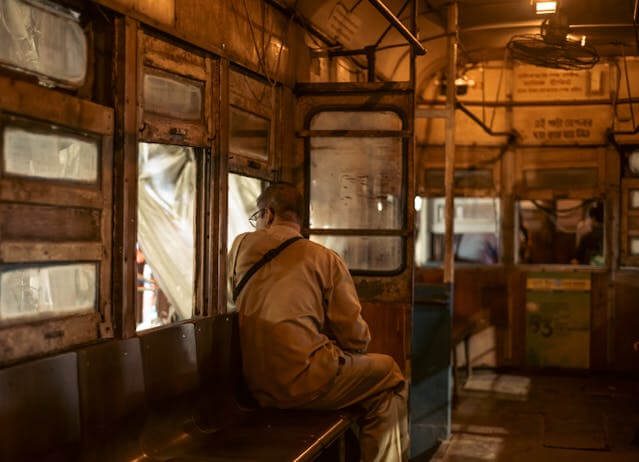
However, the popularity of trams among people remained high. Considering the profit potential, three British entrepreneurs came forward and established the Calcutta Tramways Company. Thus, seven years after its initial failure, on November 9, 1880, tram services resumed.
Improved horses were introduced, and with better business strategies, the network expanded along with the number of trams. Around this time, steam-powered trams were also tested, but due to higher costs and noise, they failed to achieve commercial success. Eventually, facing multiple challenges, electric trams were introduced on March 27, 1902, with planning that had begun as early as 1900. This marked a turning point in the history of Kolkata trams.
Step by step, the Kolkata tram network expanded and flourished. Even with the introduction of buses and taxis, they could not overshadow the dominance of trams for a long time. The city echoed with the success of tramways for decades. But gradually, the decline of Kolkata trams began, largely attributed to administrative inefficiency and a lack of intent. After independence, British investors started withdrawing their involvement, leading to financial strain.
Kolkata Tram Journey Timeline
| Sl. No. | Year | Chronological Development of the Tramway in Kolkata since 1880 |
|---|---|---|
| 1 | 1880 | The Calcutta Tramways Co. Ltd. was formed and registered in London on 22nd December. Meter gauge horse-drawn tram track between Sealdah to Armenian Ghat via Bowbazaar Street, Dalhousie Square, Customs House and Strand Road was laid. |
| 2 | 1882 | Steam locomotives were deployed experimentally to haul tramcars. By the end of the 19th Century the company owned 186 tramcars, 1000 horses, 7 steam locomotives and 19 miles of tram tracks. |
| 3 | 1900 | Electrification of Tramways and simultaneous reconstruction of tracks to the standard gauge (4 feet 8.5 inches) was taken up. By 1905 the entire system was converted to electric traction. |
| 4 | 1943 | The Calcutta system was connected with Howrah section through the new Howrah bridge in February. With this extension, the total track length reached 42.09 miles (67.73 kms). |
| 5 | 1951 | The Government of West Bengal entered into an agreement with the Calcutta Tramways Co. and took over all rights with regards to Tramways. |
| 6 | 1970 | The Howrah sections were closed down and Nimtala Ghat route was closed down in May 1973. The total track length was reduced to 38.58 miles (62.08 kms). |
| 7 | 1985 | Extension of track was completed connecting Maniktala to Ultadanga Station via Maniktala main road (3.7 kms). This was the first Tramways extension since 1947. |
| 8 | 1986 | Further extension of tram track from Behala to Joka was completed. |
| 9 | 1992 | Calcutta Tramways Company has taken a new venture by introducing Bus service initially with a fleet of 40 buses. |
At the same time, the general public also faced economic hardships. Tram routes began to shrink, starting from Howrah. Over time, Kolkata trams failed to keep pace with changing needs, and efforts to sideline them increased. Although there was a brief revival of interest, it coincided with the development of the Kolkata Metro. Due to its speed and efficiency, people gradually shifted towards the metro, reducing their dependence on trams.
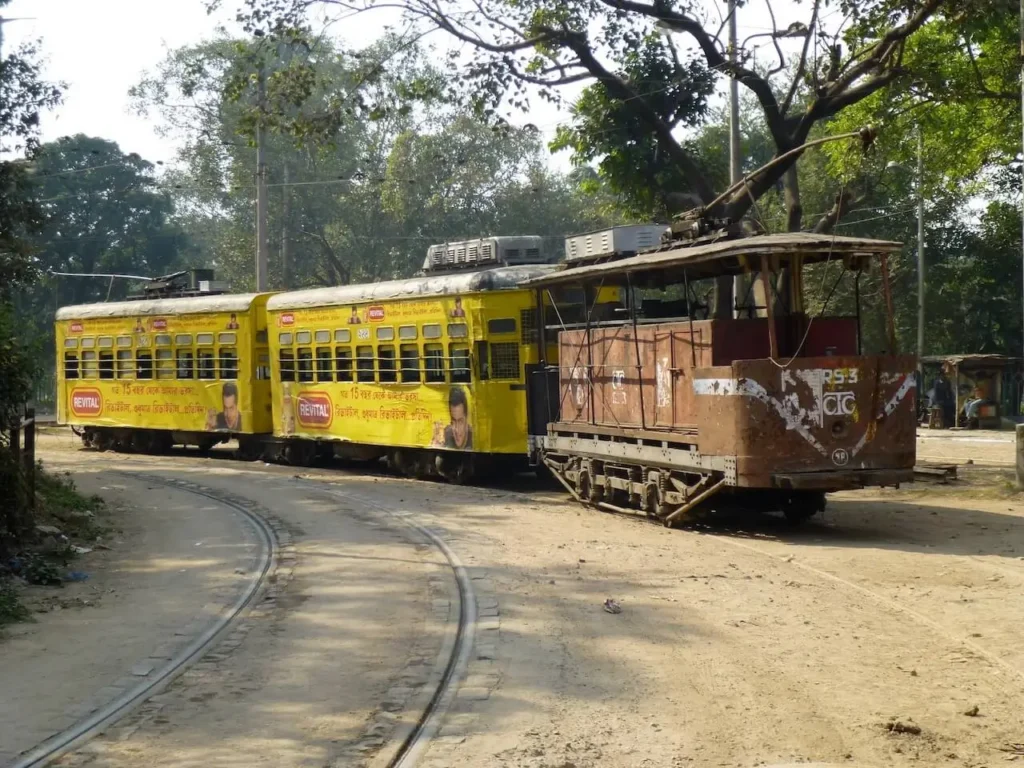
Today, Kolkata tram routes are struggling to maintain their existence. A retired tram employee mentioned that around 35 years ago, nearly 350 trams operated across various roads in Kolkata. Now, the number has dwindled to just 14, running tram service in Kolkata, timing 7 a.m. and 7 p.m., across only two routes—Garia to Dharmatala and Dharmatala to Shyambazar. He also stated that there have been no new recruitments, and the existing system is in a severely deteriorated condition.
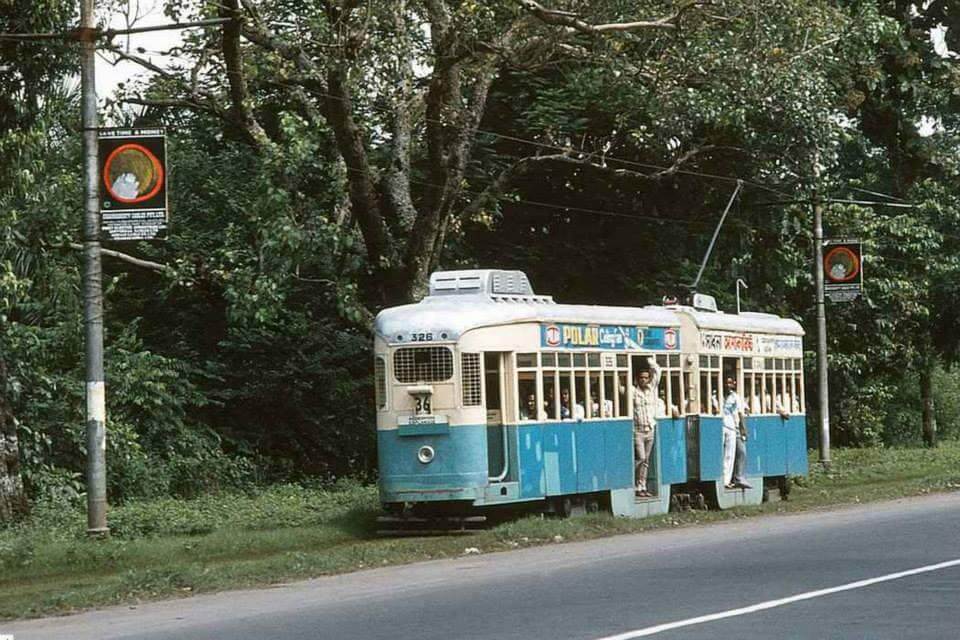
On the other hand, the state government argues that the slow speed of trams makes them incompatible with modern traffic, contributing to congestion. As a result, there have been discussions about discontinuing the service. Yet, amidst all this, our hope remains that this heritage should survive. Its disappearance would mean the loss of a significant part of our cultural legacy.
Steps to Revive Trams In Kolkata
However, we as citizens have only one appeal, one that is not driven merely by emotion, but by reason and thoughtful judgment. Across the world, more than 450 tram systems are being operated with great efficiency. Do those places not have metro systems? Do they not have access to faster modes of transport? Trams and metros are not competitors.
Trams serve a smaller scale, while metros operate on a larger one. Even if we accept that there are issues like electricity, are there no possible solutions? Kolkata is largely a tropical region; surely, we can explore alternatives suited to that context. If we truly want, many such possibilities can emerge. Therefore, our demand is this: instead of completely abolishing the system, choose its reform and development. Because the Kolkata tram is not just a mode of transport, it is our emotion, our heritage.Why are 98 out of 100 the hottest cities in India?
