

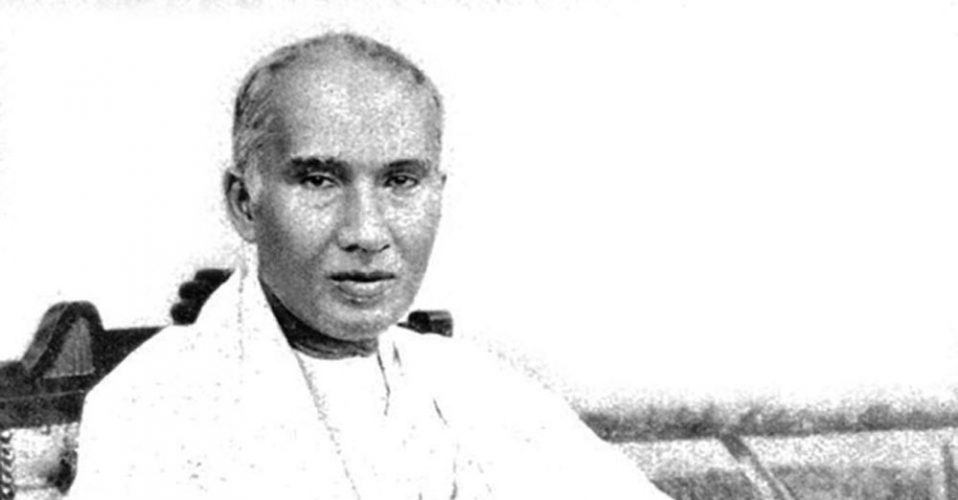
Who Was Pramatha Nath Bose?
Long before India became an industrial power, one Bengali scientist laid the foundation for the country’s mining and steel industry. Pramatha Nath Bose was not only India’s first Indian science graduate from the University of Cambridge, but also the geologist whose discoveries helped shape modern industrial India. From discovering iron ore and oil fields to inspiring Jamsetji Tata to establish India’s first steel plant, the contributions of Pramatha Nath Bose remain among the most overlooked chapters in Indian history.
Table of Contents
Early Life of Pramatha Nath Bose
Pramatha Nath Bose, also spelt Pramathanath Bose, was born in 1855 in the remote village of Gaipur near Gobardanga in the 24 Parganas district of West Bengal. His father, Taraprasanna Bose, worked in the government’s water police department, while his mother was Shashimukhi Devi. From a young age, Bose displayed extraordinary academic brilliance. He completed his primary education at Adarsh Banga Vidyalaya in Khantura and passed the matriculation examination at just 14. After earning a scholarship, he joined Krishnagar College. His exceptional talent later earned him admission to St. Xavier’s College, Kolkata.
First Indian Science Graduate From Cambridge
In 1864, Pramatha Nath Bose, influenced by the famous Brahmo reformer Keshab Chandra Sen, in 1874, topped the prestigious Gilchrist Scholarship examination and travelled to England for higher studies. At the University of Cambridge, he reportedly became acquainted with Rabindranath Tagore.
He made history by becoming the first Indian to graduate in science from Cambridge, securing 3rd position in Geology. Bose later enrolled at the Royal School of Mines, specialising in geology and palaeontology. Even in England, he outperformed British students and topped the final examinations.
To manage and sustain his educational expenses in England, Bose started to teach indian student who were preparing for the Indian Civil Service Examination. Where Rabindranath Tagore was also a student of Pramathanath for a while in one such educational institution

Struggle Against British Discrimination
Despite his extraordinary qualifications, the British administration initially denied him high-ranking positions in departments like the Geological Survey of India (GSI) and the education service.
To survive in England, Bose delivered lectures across various platforms. During this period, he met nationalist leaders like Dadabhai Naoroji and Anandamohan Bose. Together, they helped establish the India Society. In his speeches, Bose openly criticised British economic exploitation in India. Alarmed by his growing influence, the British government eventually appointed him to a senior role in the Geological Survey of India in 1880. He became the first Indian to be directly appointed to such a high scientific position.
During his job, the Geological Survey of India director William Kim praised Pramatha Nath Bose for his excellent work. Sir Thomas Henry Holland, ten years Pramathanath’s junior, was appointed Director of the Geological Survey of India. Protesting the British Government’s unfair rules and policies, he retired early from the Geological Survey of India in 1903 at the age of 49. Later, he joined the Mayurbhanj State service in 1904.
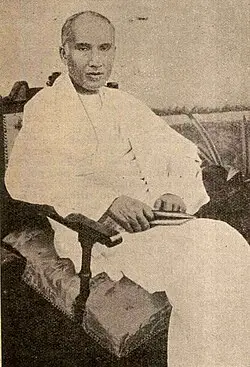
Discoveries That Changed India
Unlike many officials who preferred office work, Pramatha Nath Bose travelled extensively across India conducting geological surveys.
Iron Ore Discovery in Dalli Rajhara
Within five years of joining the GSI, Bose discovered massive iron ore deposits in Dalli Rajhara, a region that later became crucial to India’s steel production.
Coal Discovery in Darjeeling
In 1890, he identified coal reserves in the Darjeeling region.
Oil Fields in Assam
Bose also discovered oil-bearing regions in Digboi and Naharkatia in Assam, helping lay the foundation for India’s petroleum industry.
Indigenous Soap Factory
Apart from geology, he encouraged indigenous industries and established one of the first soap factories using Indian methods and resources.
The Discovery That Led to Tata Steel
The greatest contribution of Pramatha Nath Bose came after he retired from government service. In 1903, Mohini Mohan Dhar, the Diwan of the Mayurbhanj Kingdom, requested Bose to survey the region for minerals. Driven by nationalist ideals, Bose accepted the challenge despite his advancing age. Within just three months, he discovered enormous iron ore deposits in the Garumahisani hills of present-day Odisha.
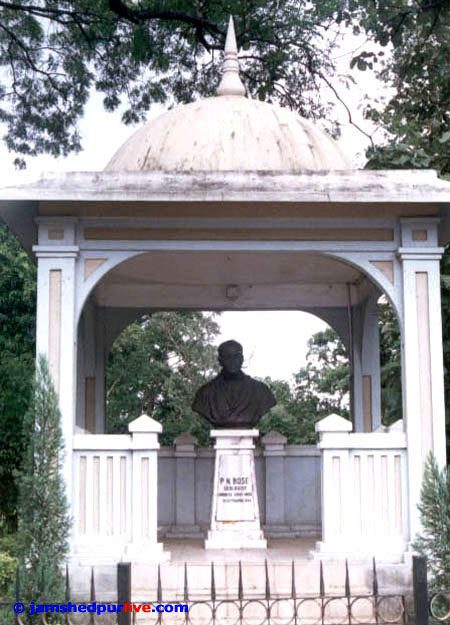
In his notebook, Bose famously wrote that the deposits appeared “virtually inexhaustible.” More than a century later, the region remains one of India’s richest iron ore belts. On February 24, 1904, Bose wrote to Jamsetji Tata about the discovery. Pramathanath Bose called Dorabji Tata, the worthy son of the famous industrialist Jamshedji Naserwanji Tata, and convinced him to establish the Tata Iron and Steel Company.
Responding to Pramathanath’s call, not only Dorabji Tata came, but also C. P. Perin, C. M. Weld and Saklatwala. This factory was established on 27 February 1908 in the village of Sakchi. Later, this region was named Jamshedpur. His recommendation played a major role in the establishment of India’s first iron and steel plant at Jamshedpur. Without Pramatha Nath Bose, the story of Tata Steel may have unfolded very differently.
Contribution to Education
Pramatha Nath Bose strongly believed that industrial progress required technical education. To fulfil this vision, he helped establish the Bengal Technical Institute in 1906. He was also its first principal. which later evolved into Jadavpur University. His efforts contributed significantly to the growth of scientific and technical education in India.
Pramatha Nath Bose (প্রমথনাথ বসু) feels that to spread scientific knowledge among the Bengali audience, Science books should be written in Bengali, so he wrote Prakritik Itihas in Bengali. He also wrote a book named Sishipath in 1884. Organised an Industrial Conference for the first time in Calcutta in 1891. He contributed one memoir and thirteen papers to the Geological Survey of India publication.
Apart from his work in Geology, Pramathanath was also a famous writer. Among the books he wrote are ‘A History of Hindu Civilisation during British Rule’, ‘Epochs of Civilisation’, ‘Civilisation Through The Ages’, ‘The Illusions of New India’, ‘Swaraj— Cultural and Political’, etc.
Personal Life
Pramatha Nath Bose married Kamala, the daughter of renowned historian, President of the Congress party, and civil servant Ramesh Chandra Dutt, on 24 July 1882. His son, Madhu Bose, became a famous figure in Bengali cinema and married Sadhana, the granddaughter of Keshab Chandra Sen. One of his grandsons, Amit Bose, became a filmmaker. Another grandson, Raja Bose, followed his grandfather’s path and became a geologist.
Death and Legacy
Pramatha Nath Bose passed away on April 27, 1934. Yet his legacy continues to live on in India’s mining, steel, oil, and education sectors. Every year, his birth anniversary is celebrated in Jamshedpur with great respect. Leaders from the Tata group, including Ratan Tata, have paid tribute to the scientist whose discoveries helped transform India’s industrial future.
Why Pramatha Nath Bose Matters Today
Pandit Jawaharlal Nehru, India’s first Prime Minister, in his message dated September 30, 1955, for P N Bose’s biography
“I am happy to associate myself, even though distantly, with the celebration of the birth centenary of Shri Pramatha Nath Bose. He was, I suppose, one of the earliest of our noted scientists and a great geologist. All of us, or many of us, talk of science and geology today, but in the middle of the nineteenth century, it was rare for Indians to think of science. Shri Pramatha Nath Bose was thus one of the pioneers of science and more particularly of geology.” Pandit Jawaharlal Nehru, India’s first Prime Minister, in his message dated September 30, 1955, for P N Bose’s biography”
The story of Pramatha Nath Bose is more than a biography. It is the story of a Bengali scientist who challenged colonial discrimination, promoted indigenous industry, discovered critical natural resources, and helped build modern India.
Despite his monumental contributions, Pramatha Nath Bose remains largely absent from mainstream media and history books. It’s our system failure that we could not idolise those who deserve to be, yet without his discoveries and vision, India’s steel and mining industries may never have developed in the same way.
support Bhalobhasa
