

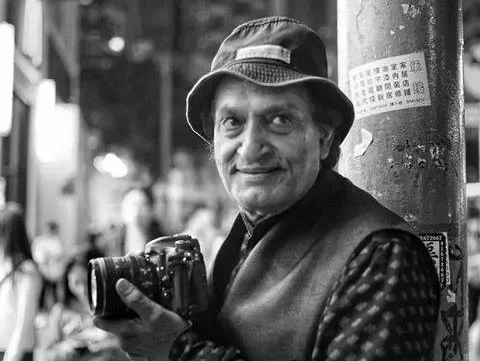
Raghu Rai, with the passing of this timeless figure at the age of 83, a golden era in India’s visual history has come to an end. He was hailed as the “Father of Indian Photography.” His contributions are not merely significant within the realm of journalism; they hold equal importance in the annals of history itself. This renowned personality was born on December 18, 1942, in the village of Jhang, undivided Punjab Province, British India (now in Pakistan).
Early in his life, Raghu Rai, acceding to his parents’ wishes, Raghu Rai pursued a degree in Civil Engineering and subsequently secured a government job in Delhi. However, he found no happiness in this role; he felt a deep sense of dissatisfaction.
He confided his feelings of discontent to his elder brother, the celebrated photographer Sharampal Chowdhury, in a letter. Upon receiving the letter and recognising his younger brother’s genuine passion, Sharampal sent him to a friend . It was there that he received his first formal introduction to the art of photography. Driven by an intense passion, he progressed with remarkable speed.
Raghu Rai Photography Career
His very first photograph, titled “Baby Donkey”—taken in mid 1960—was published in The Times of London in 1966. In 1965, he was appointed as a staff photographer at the Delhi office of The Statesman. Even the legendary French photographer Henri Cartier-Bresson was deeply impressed by his work, offering him high praise after viewing his photographs at an exhibition held in Paris in 1971. So impressed was Cartier-Bresson that he invited Rai to join “Magnum Photos”—the prestigious agency he had co-founded—as a photojournalist.
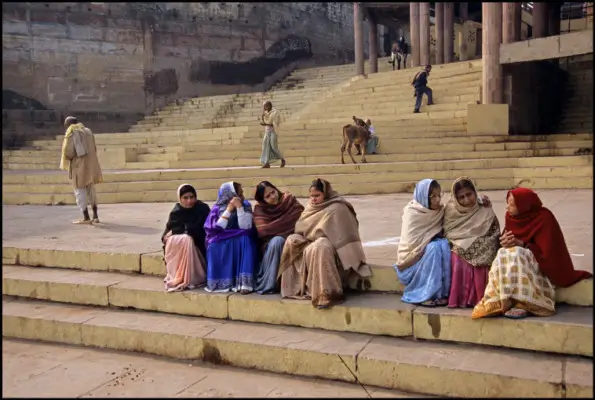
Subsequently, in 1976, Raghu Rai left The Statesman to take up the position of Picture Editor at the weekly magazine Sunday. His contributions were evident in virtually every major publication of the era; he also spent several years working for a renowned English-language news magazine. Furthermore, between 1990 and 1997—a span of just seven years—he served twice on the jury for the UNESCO International Photo Contest.
This stands as a testament to the far-reaching extent of his global renown. Alongside his photography, he also penned photo-essays, which were published with great distinction in the leading magazines and newspapers of the time. A glance at his photographs reveals that he did not merely capture images for the sake of news reporting; rather, he used his camera to tell stories.
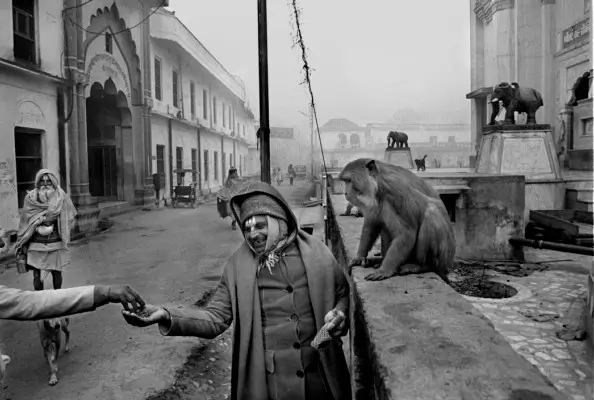
With his camera as his constant companion, he journeyed to the farthest corners of the world. Through the course of his work, he bore witness to a myriad of events and experiences. There are many such instances—for example, the Raghu rai Bhopal gas tragedy photos of 1984, or the horrors of the war in Bangladesh. He constructed a vivid visual chronicle of Indian history.
From the ghats of the Ganges to the winding alleys of Delhi and Kolkata, he roamed far and wide with his camera in hand. His intuition regarding the precise moment to capture a photograph was boundless. He once remarked, “I met my God through my camera”—implying that, for him, photography was not merely a mundane task, but also a source of spiritual solace.
He further stated, “Photography for me is connecting with nature and humans.” In other words, the objectives behind his photography were crystal clear. A few examples of his renowned works include The Male Gaze, a series featuring the celebrated writer Arundhati Roy that captures the collective male gaze directed toward her.
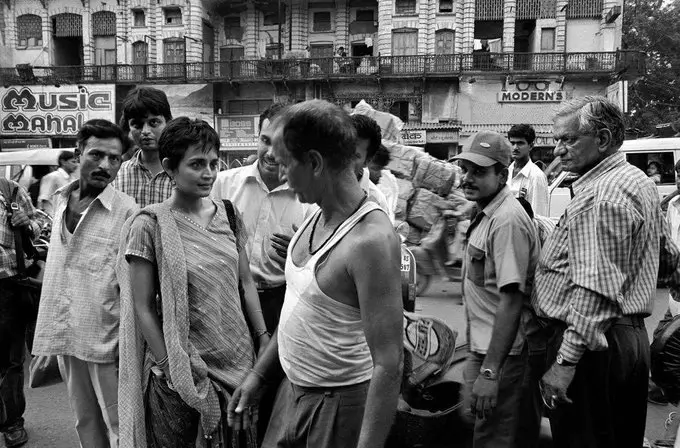
His portfolio boasted portraits of iconic figures such as the then-Prime Minister of India, Indira Gandhi; the Dalai Lama; and Mother Teresa. Ordinary people—their daily lives and their struggles with poverty—also played a pivotal role in the images he captured. Essentially, his photographs served as a social archive of that era, offering profound insights into the times in which they were created.
Among his accolades was the Padma Shri, awarded to him for his commendable work documenting the Bangladesh Liberation War, as well as the prestigious “Photographer of the Year” award from the USA in 1992.
Indeed, the entire world was captivated by his work. Although he has passed away, his photographs will ensure that his legacy lives on forever.
